
NORTH / SOUTH OF KOBE STATION
Kobe Station looks different
depending on the exit.
South leads toward the water. North leads deeper into the city. One station, two very different ways to meet Kobe.
ONE STATION, TWO SIDES
South feels destination-led. North feels street-led.
South of Kobe Station is Harborland, officially introduced as one of Kobe’s major shopping and sightseeing areas. To the north, streets continue toward Kosoku Kobe, Okurayama and Shinkaichi, while restaurants, offices, homes and everyday services appear almost immediately.
Kobe as an easy destination.
Harborland umie, waterfront walks, the ferris wheel and large commercial spaces make this the side many visitors naturally head toward.
Kobe as an everyday neighborhood.
Within minutes, restaurants, offices, hotels, clinics and local businesses sit close together. Aioicho 4-chome — AIYON’s focus — is on this side.
WHERE DOES NORTH GO?
The north side keeps connecting to other neighborhoods.
Kobe City’s station-plaza plan positions Kobe Station as a circulation hub not only for Harborland but also for Motomachi, Okurayama and Shinkaichi. The north side is not simply a back entrance; it is another gateway into the city.
The city continues north toward cultural facilities and the shrine area.
Ground and underground routes connect toward neighborhoods west of the station.
Just northwest of the station — the small area AIYON documents in depth.
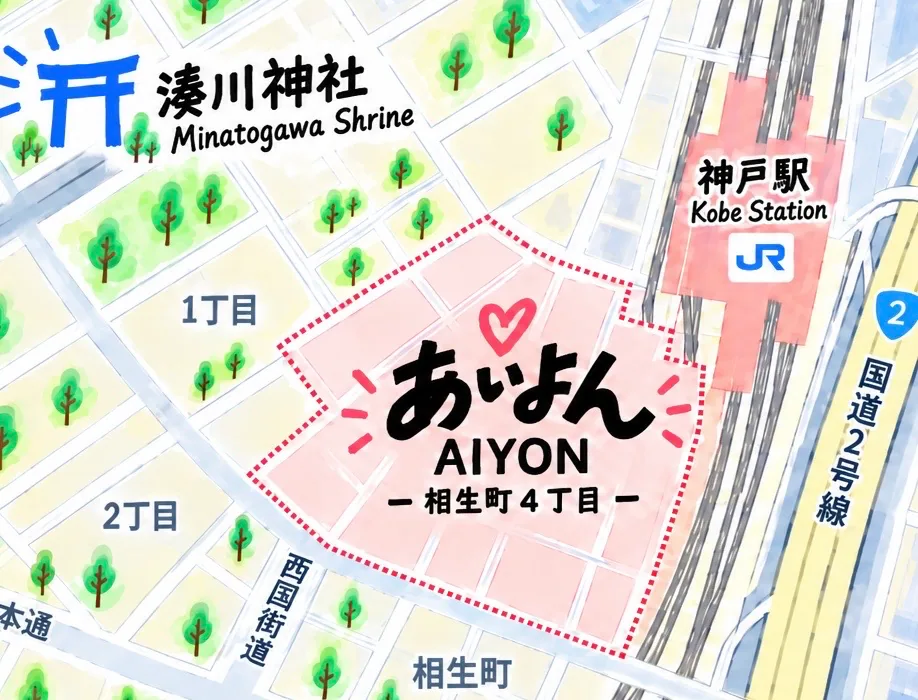
Instead of covering every major attraction, AIYON looks closely at the shops, lanes and everyday movement of Aioicho 4-chome — another side of Kobe Station.
WHY AIYON?
That is why AIYON looks north.
Harborland already has a huge amount of visitor information. AIYON focuses on the everyday north side, where search results often show only one shop at a time. Starting with Aioicho 4-chome, we make Kobe Station’s more local side easier to see.

“The waterfront is Kobe. These little lanes are Kobe too.”
Feel KOBE / Harborland ・ Kobe City / Station Plaza Plan